Interview Evaluation Form
Interview Evaluation Form: Meaning, Importance & Best Practices
When it comes to hiring the right talent, first impressions in an interview can be misleading.
That’s why many companies including those in the UAE rely on an Interview Evaluation Form to make hiring decisions based on structured, measurable and consistent criteria rather than gut feelings.
What Is An Interview Evaluation Form
An Interview Evaluation Form is a structured document used by interviewers to assess candidates after an interview. It ensures that every candidate is judged against the same set of skills, qualifications, and cultural fit criteria.
Instead of relying on quick notes scribbled during the meeting, the form provides a clear, organized framework that captures the candidate’s performance in detail, making it easier to compare candidates and justify hiring decisions.
Why Use an Interview Evaluation Form in the UAE?
The UAE’s job market is highly competitive and attracts talent from all over the world. With such diversity in backgrounds, qualifications, and expectations, having a standardized evaluation method is crucial for:
Fairness & Consistency: Ensuring every candidate is assessed on the same criteria, regardless of nationality or background.
Compliance: Many companies in the UAE operate under strict HR and recruitment guidelines. A documented evaluation process can help demonstrate transparency.
Faster Decision-Making: When multiple stakeholders are involved in hiring, the form provides a quick reference for comparing candidates side-by-side.
Reducing Bias: A structured scorecard helps focus on skills, experience, and competencies rather than personal preferences.
Key Elements of an Interview Evaluation Form
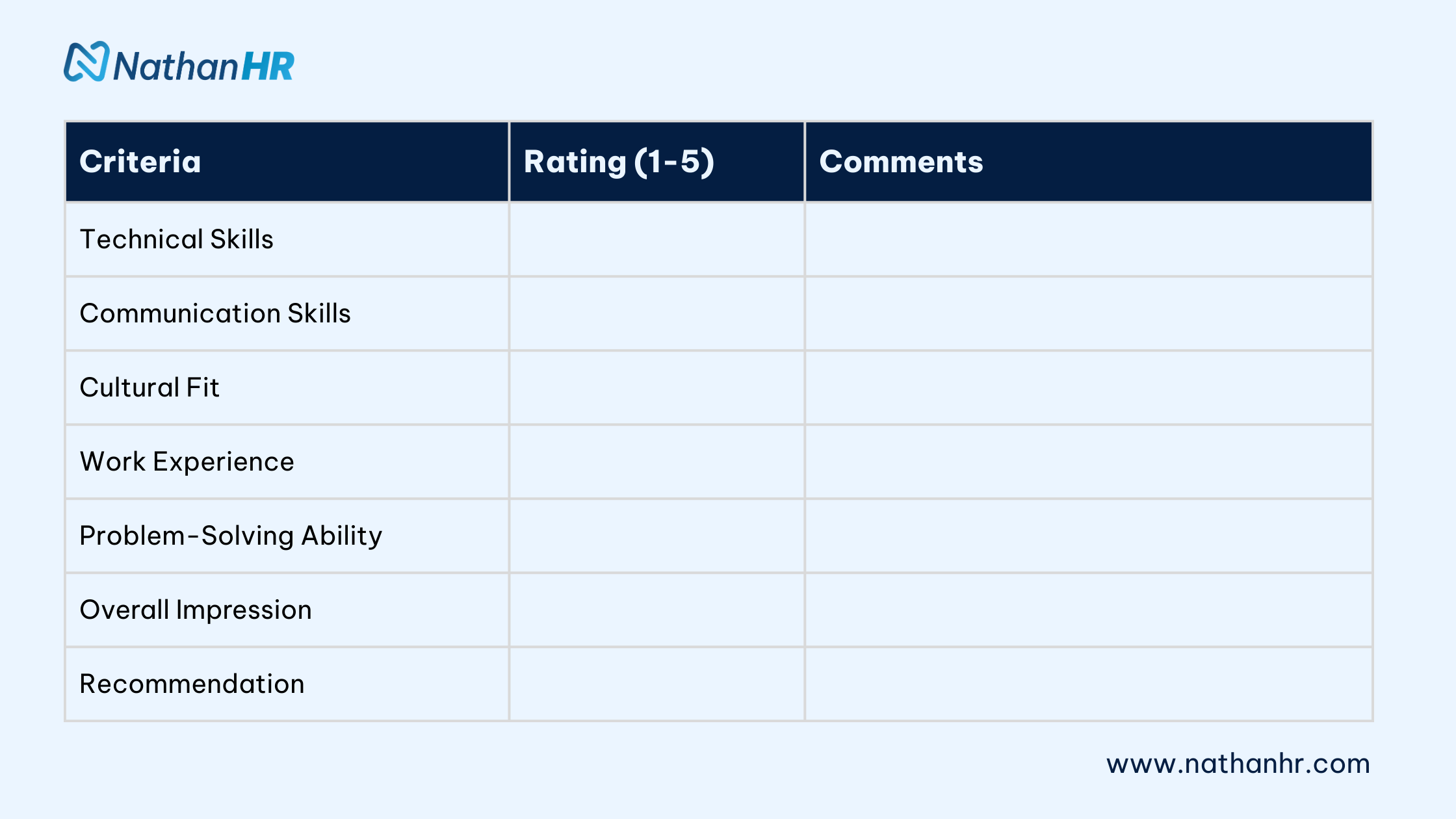
While formats may vary, an effective evaluation form usually includes:
- Candidate Details - Name, position applied for, interview date, interviewer name.
- Technical Skills Assessment - How well the candidate meets job-specific skills.
- Soft Skills Assessment - Communication, teamwork, adaptability, and leadership potential.
- Cultural Fit - Alignment with company values and the UAE workplace environment.
- Work Experience & Qualifications - Relevance to the role and industry.
- Problem-Solving & Critical Thinking - Ability to handle challenges.
- Overall Impression - Summary notes and final rating.
- Recommendation - Hire, hold, or reject.
Types of Interview Evaluation Forms
Numeric Rating Scale: Scores candidates on each skill (e.g., 1–5).
Descriptive Evaluation: Written notes summarizing performance.
Hybrid Forms: Combines ratings with comments for a balanced view.
Competency-Based Forms: Focuses on evaluating specific competencies needed for the role. Behavioral Interview Scorecards: Tailored for assessing how candidates have handled situations in the past.
Best Practices for Using Interview Evaluation Forms
- Customize to the Role - A sales position may require a stronger focus on communication and persuasion, while a technical role may prioritize problem-solving skills.
- Train Interviewers - Ensure hiring managers know how to use the form effectively.
- Be Culturally Sensitive - The UAE has a diverse talent pool; forms should avoid criteria that may unintentionally discriminate.
- Keep Records - Maintain completed forms for audit trails and future reference.
- Use as Part of a Bigger Process - The form should complement structured interviews, background checks, and reference checks.
Example of an Interview Evaluation Form
Conclusion
An Interview Evaluation Form is more than just a checklist, it’s a vital HR tool that helps UAE businesses hire better, faster, and more fairly.
By standardizing assessments, you reduce bias, improve decision-making, and ensure every hire is based on merit.
In the UAE’s fast-moving and multicultural job market, this tool can be the difference between hiring the right person and making a costly mistake
FAQs on Interview Evaluation Forms
Is using an interview evaluation form mandatory in the UAE?
No, but it’s highly recommended for consistency, fairness, and compliance with HR best practices.
Can small businesses benefit from it?
Absolutely. Even if your team is small, using a form can help avoid hiring mistakes.
Should the candidate see their evaluation form?
Usually no, as it’s an internal HR tool. However, constructive feedback can be shared separately.
Can the form be digital?
Yes. Many UAE companies now use HR software to store evaluation forms for easy access and collaboration.