Disability leave
Disability leave is a crucial workplace benefit that ensures employees can take time off when they’re unable to work due to illness, injury, or a medical condition, without losing their job or financial security.
Whether temporary or long-term, disability leave provides important protection for both employees and employers.
What Is Disability Leave?
Disability leave is a type of job-protected leave that allows employees to take time off work due to a physical or mental health condition that limits their ability to perform their job.
This leave may be:
- Short-term (typically lasting a few weeks to a few months)
- Long-term (extending beyond several months or even years)
The condition may be the result of an accident, surgery, a chronic illness, pregnancy complications, or any disabling condition certified by a healthcare provider.
Depending on the country or company policy, this leave may be paid, partially paid, or unpaid, and may be supported by a disability insurance plan, social security benefits, or labor law provisions.
What Qualifies as a Disability?
Not all medical conditions qualify for disability leave. Generally, a disability is any condition that significantly limits a person’s ability to perform one or more major life activities, including working. Examples include:
- Back injuries or mobility impairments
- Post-surgery recovery
- Mental health disorders (e.g., severe depression, anxiety)
- Neurological conditions (e.g., epilepsy, MS)
- Cancer or long-term illness
- Pregnancy-related complications
- A doctor’s certification is usually required to approve the leave and define its duration.
Types of Disability Leave
1. Short-Term Disability Leave
Used for temporary conditions (like recovery from surgery or a serious illness). Coverage usually lasts between a few weeks and six months. In some companies, short-term disability insurance covers a percentage of your salary during this time.
2. Long-Term Disability Leave
If an employee is unable to return to work after short-term leave, they may move into long-term disability, which may last for a year or longer depending on the condition and insurance coverage.
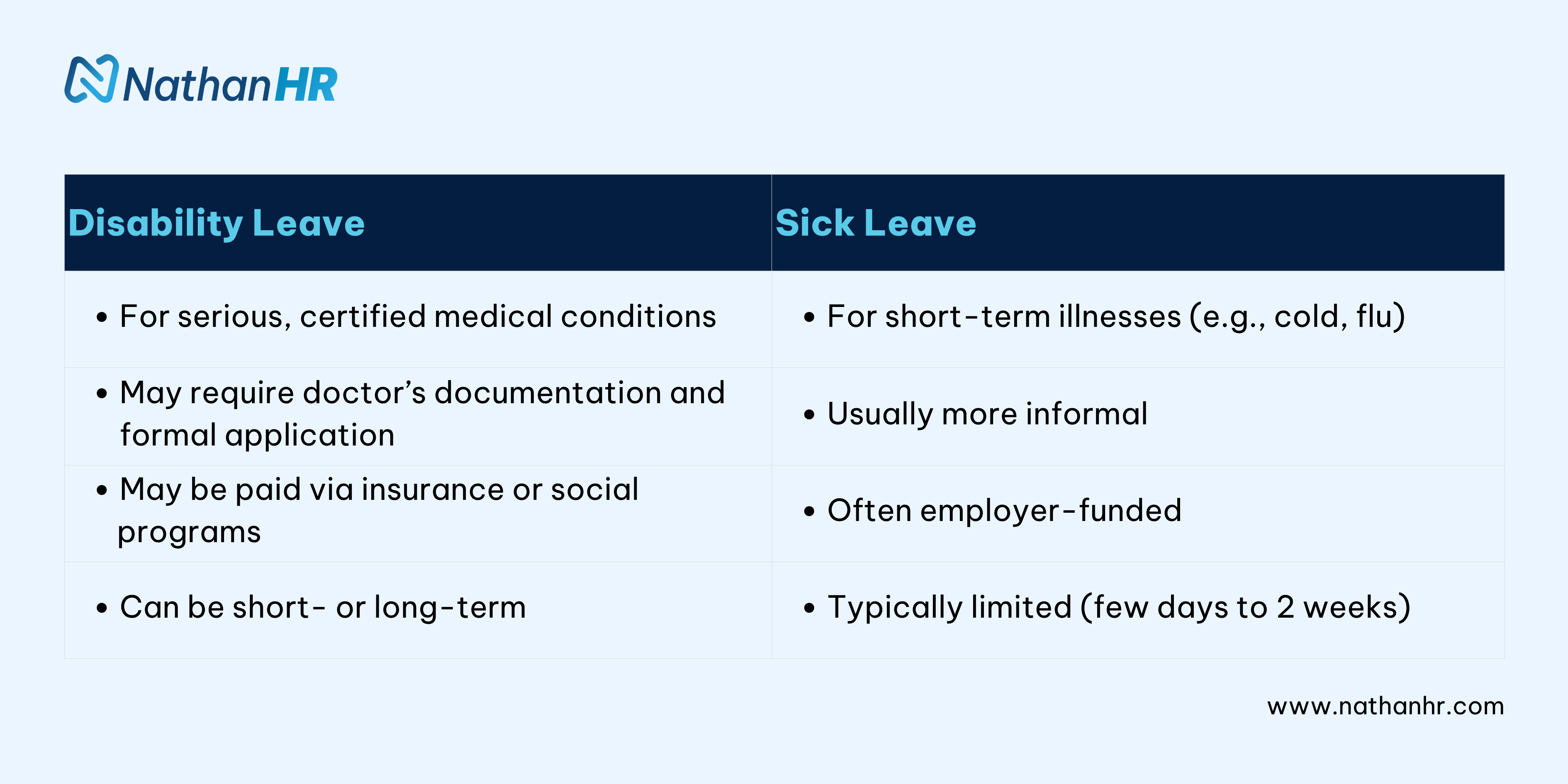
Disability Leave vs Sick Leave: What’s the Difference?
How Disability Leave Works
Step-by-Step Process:
- Report the Condition: Notify HR or your supervisor as soon as you're aware you’ll need leave.
- Submit Medical Documentation: A healthcare provider must confirm the disability and estimated duration.
- Apply for Leave: Complete any required forms and insurance applications.
- Leave Is Approved: Based on internal policies and/or labor laws.
- Paid or Unpaid Leave Begins: Depending on insurance, policy, or national requirements.
- Communication During Leave: You may be required to provide updates or additional documents.
- Return to Work or Extension: When ready, employees return, sometimes with accommodations. If not, a reassessment may extend the leave.
Legal Protections (Depends on Region)
In many countries, disability leave is protected under employment law.
UAE & GCC: Labour laws provide leave entitlements for sickness and injury; employers may require medical proof.
U.S.: The Family and Medical Leave Act (FMLA) offers up to 12 weeks of job-protected unpaid leave.
UK: Statutory Sick Pay (SSP) and employer policies can apply.
Make sure to check your country’s specific laws and regulations.
Benefits of Disability Leave
For Employees:
- Job protection during medical recovery
- Time to heal without rushing back to work
- Financial support through disability insurance or partial salary
- Mental well-being by reducing stress during illness
For Employers:
- Helps retain valuable employees
- Reduces risk of lawsuits from wrongful termination
- Encourages a supportive, inclusive workplace culture
Challenges of Managing Disability Leave
Workforce coverage: Managing workflow while an employee is away
Documentation & compliance: Navigating local labor laws and insurance requirements
Return-to-work planning: Accommodating transitions without disrupting teams
Best Practices for Employers
- Create a clear, documented disability leave policy
- Train HR teams on handling medical leave requests with empathy and confidentiality
- Use technology to track leave duration, documents, and follow-ups
- Offer flexibility, remote work options, or gradual reintegration when possible
Final Thoughts
Disability leave is more than just time off, it’s a safety net that protects both people and businesses when life takes an unexpected turn. If you’re an employee, know your rights and communicate early. If you’re an employer, support your team with clear policies and a compassionate approach. A well-handled disability leave policy isn’t just about compliance,it’s about creating a workplace that values people.
FAQs About Disability Leave
Is disability leave paid or unpaid?
It depends on your country, employer policy, and whether you have disability insurance. Some offer partial or full pay.
Can I lose my job while on disability leave?
In most cases, no. Job protection is part of disability leave in many legal systems but there are limits if leave exceeds certain timeframes or isn’t renewed properly.
How long can disability leave last?
Short-term disability usually lasts a few weeks to 6 months. Long-term disability can extend for a year or more, depending on your case and benefits.
Do mental health conditions qualify for disability leave?
Yes, if the condition is serious enough to prevent you from working and is supported by medical documentation.
Can employers deny disability leave?
Employers can only deny it if proper documentation isn’t submitted or if it doesn’t meet the eligibility criteria.